
Prime Minister Narendra Modi has urged the fintech sector to expand the global reach of India's Unified Payments Interface (UPI), connecting it with local systems in other countries to help the diaspora save on remittance costs.

Prime Minister Narendra Modi has called upon the fintech industry to expand the global footprint of the Unified Payments Interface (UPI), advocating for its integration with international payment systems to reduce remittance costs for the Indian diaspora. Speaking at the Global Fintech Fest, Modi highlighted UPI's current presence in 11 countries and its connection with Singapore's local system, urging further expansion into nations with significant Indian populations or trade ties. He also stressed the need for India to set its own global payment standards and for the fintech sector to innovate beyond payments, focusing on cybersecurity, ethical data protection, and regulatory frameworks.

India's Unified Payments Interface (UPI) recorded an unprecedented 24.51 billion transactions valued at Rs 29.8 lakh crore in August, largely propelled by the Raksha Bandhan festival. This surge marks a 22% annual increase in volume and 20% in value, highlighting the expanding reach and depth of the UPI ecosystem. Experts anticipate further growth during the upcoming festive season, while UPI's international acceptance now spans 11 countries.
Unified Payments Interface (UPI) transactions in India reached Rs 29.8 lakh crore in August, approaching record levels. Volume also hit a new high of 24.51 billion transactions, driven by festive activities like Raksha Bandhan. The digital payment system continues its rapid growth, expanding its global presence to 11 countries, with further growth anticipated during the upcoming festive season and new use cases like credit on UPI.

The Unified Payments Interface (UPI) has completed a decade since its launch, becoming the backbone of India's digital payments ecosystem. It has seen exponential growth in transaction volume and value, expanding financial inclusion and setting a global benchmark for real-time payments.

A high-level committee, including representatives from banks and payment associations, is set to decide on Merchant Discount Rate (MDR) for UPI transactions exceeding Rs 2,000 to merchants. While person-to-person and person-to-merchant transactions up to Rs 2,000 remain free, the move follows a recent amendment to the Payment and Settlement Systems Act, sparking debate and clarification from the Finance Minister that only certain high-value merchant transactions might incur charges.
The Indian government has mandated that banks and payment providers cannot levy charges on UPI transactions up to Rs 2,000 or on payments made via RuPay debit cards. This directive follows an amendment to the Payment and Settlement Systems Act, 2007, aiming to sustain and expand the digital payments ecosystem.

Razorpay CEO Harshil Mathur highlights India's leadership in real-time payments, stating it can foster numerous billion-dollar fintech companies capable of expanding globally. He draws parallels with the US internet boom and discusses how India's unique regulatory and private sector collaboration, exemplified by UPI, can be replicated in other emerging markets. Mathur also touches upon the opportunities and risks associated with leveraging AI in business.

The Reserve Bank of India (RBI) has introduced new features for India's digital payment ecosystem, including UPI tap-to-pay for PIN-less transactions up to 5,000 and multi-currency capabilities for forex on Bharat Connect, supporting Euro, British Pound, and other major currencies.

The Indian government has clarified that consumers will not be charged for UPI transactions, and most merchant transactions will also remain free. This comes amidst speculation following an amendment to the Payment and Settlement Systems Act, 2007. Any future merchant discount rate (MDR) would be nominal, threshold-based, and aimed at ensuring UPI's long-term sustainability and infrastructure development.

Unified Payments Interface (UPI) transactions reached a record high in March, driven by festivities and the financial year closure, according to the National Payments Corporation of India (NPCI).

BJP MP Raghav Chadha addressed the 12th IPU Global Conference of Young Parliamentarians in Samarkand, Uzbekistan, highlighting India's digital transformation journey. He emphasised how technology is widening access and promoting inclusion, citing UPI's success, affordable data, and robust data protection laws. Chadha also discussed India's digital cooperation with Uzbekistan and the importance of digital rights, safety, and skill development for all citizens.

Unified Payments Interface (UPI) transactions in India reached a record high in March, driven by increased adoption and global expansion. The system now accounts for 85% of digital transactions in India and is live in eight countries.
Unified Payments Interface (UPI) transactions in India reached a record high in March, with 22.64 billion transactions, marking a significant increase from the previous year and highlighting the growing adoption of digital payments.
Unified Payments Interface (UPI) has reached a record Rs 314 lakh crore in transaction value in FY26, representing more than a 4,000-fold increase since inception.

UPI transactions reached 22.35 billion in April, marking a 25 per cent increase compared to April 2025. UPI now accounts for 85 per cent of all digital transactions in India and is live in eight countries.

PhonePe, at the Global Fintech Fest 2026, unveiled its strategic vision for the next decade, focusing on inclusive digital progress for individuals, households, and businesses across India. The roadmap details innovations in financial inclusion, wealth creation, credit access, and merchant solutions.

'When you think of cross-border payments, the first things that come to mind are risk, compliance, taxation, speed, and cost.'
Zelle, a major US peer-to-peer payment service, is set to launch in India by the end of this year, marking its first international expansion. The move aims to tap into India's large remittance market, offering a service similar to UPI but integrated with bank apps. Zelle also introduced ZelleUSD, a stablecoin for future global payment capabilities.
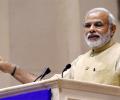
Prime Minister Narendra Modi, in his Independence Day address, highlighted technology and innovation as central to India's goal of becoming a developed nation by 2047. He called for India to lead in emerging technologies like AI, quantum computing, and space, announcing a massive AI skilling initiative for one crore youth. Modi stressed the importance of becoming a global innovation hub, bolstering energy security with nuclear power, and strengthening cybersecurity.

The question for the next 20 years is not whether India can become a $5 trillion or $10 trillion economy. Those are attractive targets, but the real question is whether India can create enough productive jobs, educate its children properly, make its cities liveable, and give hundreds of millions of people a substantially better life, asserts Ramesh Menon.

Prime Minister Narendra Modi and Indonesian President Prabowo Subianto have significantly advanced the India-Indonesia Comprehensive Strategic Partnership, securing crucial agreements on defence, critical minerals, and maritime security, including BrahMos missile supply and Sabang port development.

Prime Minister Narendra Modi celebrated 11 years of the Digital India initiative, highlighting its role in redefining governance, empowering citizens, and accelerating all-round development. He emphasised its impact on digital payments, direct benefit transfers, and expanding digital public infrastructure, making technology a powerful instrument for 'Ease of Living' across India, including tier-2 and tier-3 cities.

A State Bank of India report indicates a sharp increase in precautionary cash holding in India, with the gap between per capita currency in circulation and ATM withdrawals widening significantly, driven by global uncertainties despite record digital payment transactions.

State Bank of India Chairman C S Setty has expressed support for a 'pause' in policy rates by the Reserve Bank of India's monetary policy committee, believing it will help stabilise conditions and support economic growth. He also urged investors to look beyond short-term equity market movements and focus on India's structural transformation, driven by reforms and digital infrastructure.
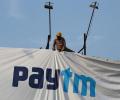
Global brokerage firm Jefferies has reiterated its 'Buy' rating on Paytm, stating that the company's growth engine and profitability will remain intact despite regulatory action on its associate entity Paytm Payments Bank Ltd (PPBL). The company has maintained its price target of Rs 1,350, implying an 18 per cent upside.

Delhi LG Taranjit Singh Sandhu addressed the Global Confluence 2026, emphasising the importance of maintaining a human element at the heart of digital nation-building. He highlighted India's digital transformation and the role of technology in improving lives, while urging a focus on inclusive development and national security.

A BofA Global Research report indicates that Paytm is leading in monetisation compared to its competitors due to its diversified mix of merchant lending and financial services, which enhances profitability and strengthens its position in the Indian fintech market.

Indian car buyers care more about affordability than technology, keeping ICE vehicles dominant while hybrids emerge as the preferred transition option and EVs struggle in the mass market.

The era where nations thrived through rigid alignments is giving way to an age where the connective State defines power. For India, that era has arrived, points out Dr Nishakant Ojha.

Across all sectors, the future of work depends on adaptability.

'India needs at least 70,000 to 80,000 eyewear stores; our 2,000 stores are just a drop in the ocean.'

'The country is a good test bed for enterprise adoption, but to scale rapidly, companies will need to look outside the country for customers.'

New-age stocks to buy: Most new-age stocks have turned out to be wealth destroyers in stock markets, so far, in calendar year 2025. Shares of Ola Electric Mobility, for instance, have plunged nearly 50 per cent in the first half of CY 2025, while those of Swiggy, PB Fintech, Paytm, and Eternal (Zomato) have crashed between 6 per cent and 25 per cent, ACE Equity data shows.

'The Bhashini Mission has delivered a working technology at large scale, which is as good as or better than the one with MNC tech giants.'

About 99,165 electric cars were sold in India in 2024, but electric car penetration -- share of electric car sales in total sales -- was just about 2.5 per cent.

The US Trade Representative noted that India's average applied tariff rate stood at 17% per cent, the highest of any major world economy.

India's internet economy is estimated to reach $1 trillion by 2030, primarily due to e-commerce, which is expected to be worth $325 billion and rank third globally, according to industry experts. Last year marked a crucial turning point for India's e-commerce sector, with notable changes in consumer trends, technology, and regulations. InGovern Research Services, a leading corporate governance advisory firm, hosted a virtual roundtable to deliberate on the notable developments in India's e-commerce sector in 2023, with a particular focus on the essential role of customer trust in fueling its ongoing expansion.

"If you see in the context of alliances and statistics, then this is the strongest alliance government," Modi said while addressing newly-elected MPs and leaders of the NDA from across the country following his election as leader of the ruling bloc ahead of his government's swearing-in on Sunday.

The decline of over 5 per cent in PB Fintech's shares (the parent company of PolicyBazaar) in the past two days presents an opportunity for long-term investors to consider buying the stock, suggest analysts. By comparison, the benchmark S&P BSE Sensex has remained flat during the same period with a negligible gain of 40 points, or 0.06 per cent. Analysts believe that the recent selling is "overdone", as the company behind the online insurance portal remains committed to achieving profitability, and the potential threat from the government's online insurance portal, Bima Sugam, might be embellished.
